 Catalogue
 Novelties
 Projects
 J3 Play structures
 Swing sets
 Slides
 Sports equipment
 Site furniture
 J2 Courses
 Inclusivity
 First Nations
 Outdoor Classroom
Jambette: Visionary
Studying today's trends to meet tomorrow's needs
By Marie-Noël Grenier | Read time 3 minutes | Published on
Categories: Enterprise, Latest news
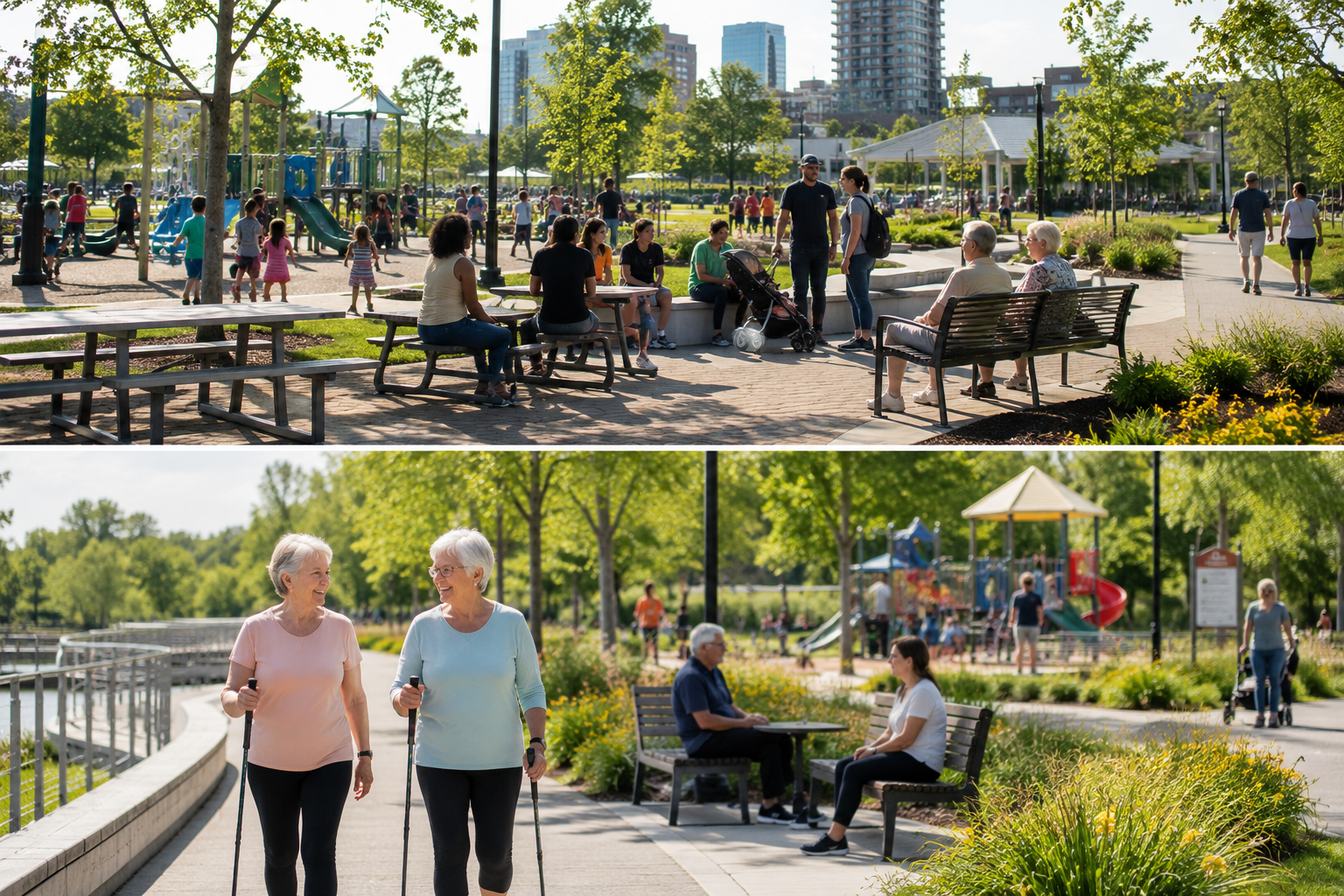
Always striving to offer solutions adapted to society's evolving needs, Jambette – in collaboration with André Thibault, Professor Emeritus at UQTR - Université du Québec à Trois-Rivières and founder of the Observatoire québécois du loisir – shares its observations, insights, and approaches to development regarding outdoor recreational spaces, play, and leisure activities in public spaces. Discover our constantly evolving field each month.
Trends and Facts
The Scope of Leisure Practices and Users Has Expanded
While there was a time when the concept of leisure referred primarily to organized activities and neighbourhood parks mainly intended for children, today the spectrum of recreational activities and the people served by municipalities has expanded considerably.
This is evidenced by the scope of users and practices description outlined by the City of Montréal in its Leisure Policy:
“In their neighbourhood, their district, or at the municipal and regional levels, people loiter, play, celebrate, engage in physical activity or sports, create or consume culture, learn, connect with each other, get to know each other, recognize each other, and form groups and clubs.
They experience and take control of their leisure activities in the street, in a neighbourhood park, a large park, or a local park, on a track or on a trail, in a gymnasium, a swimming pool, an arena, a library, a community centre, or a cultural centre. They enjoy their leisure time freely, spontaneously or in an organized fashion, or participate in events of varying sizes.”
Today, according to The 2023 City Parks Report[1], park attendance affects the entire population and corresponds to a strong desire.
- 15% increase in urban park attendance between 2020 and 2022 in Canada
- 64% of city dwellers reported visiting a park at least 2 to 3 times a week, with 20% visiting every day
- 51% stated they would like to spend more time in parks than they do now
1Report on Canada's Urban Parks, Park People, September 2023
Some Significant Social Changes
The changing and diversifying uses of public recreational spaces can be explained by the aging population, immigration, and cultural diversity, as well as the increase in activities enjoyed as a family. Furthermore, the rising loneliness and cost of living (which lead to poverty and inaccessibility) justify the efforts made by municipalities to improve access to parks and other public spaces. All of this occurs within a context of an increasingly dense population and the promotion of healthy lifestyles.
Aging:
In 2024, about 21% of Québec's population will be 65 years of age or older, compared to only 9% in 1971. This figure could reach 26% by 2041. Moreover, seniors are more physically active. For example, in Trois-Rivières in 2017, 5,177 people aged 50 and over were registered at fitness centres, representing 20% of seniors aged 50 to 70.
As a result, neighbourhood parks and pedestrian or cycling paths are largely used by retirees in good physical condition and who require adapted facilities. These places are becoming, in effect, "third places" where people meet outside their homes. These spaces often become an extension of the home, especially in densely populated areas where multi-unit dwellings do not offer the amenities of suburban houses with yards equipped for recreation.