Catalogue
 Novelties
 Projects
 J3 Play structures
 Swing sets
 Slides
 Sports equipment
 Site furniture
 J2 Courses
 Inclusivity
 First Nations
 Outdoor Classroom
Jambette: Visionary (part 2)
Studying Today's Trends to Meet Tomorrow's Needs
By Marie-Noël Grenier | Read time 3 minutes | Published on
Categories: Enterprise, Latest news
In collaboration with André Thibault, Professor Emeritus at UQTR and founder of the Observatoire québécois du loisir, Jambette shares its observations and insights on the evolution of outdoor recreational spaces, play, and leisure in public spaces.
Discover the trends that are shaping parks today and that will influence the parks of tomorrow.
Trends and Facts
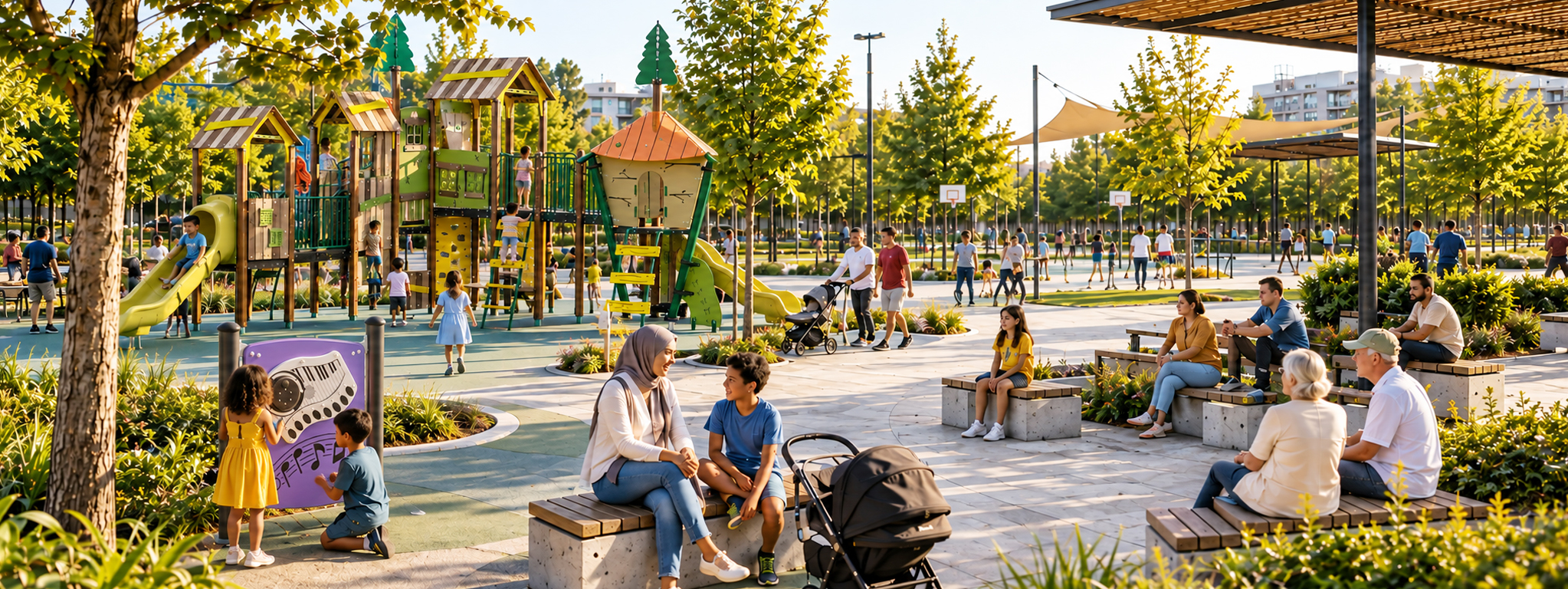
Public parks are evolving in step with society. Our ways of playing, moving, socializing, and using public space are changing. Diversifying activities, family outings, immigration, free play, and events are already altering park usage.
Diversifying Activities
Leisure activities are becoming more diverse, and free play has an increasingly important role compared to structured activities. One-off events, such as neighbourhood parties, outdoor movie nights, and competitions, also help enliven public spaces.
Technology and digital entertainment present another challenge. While they can be a contributing factor to people staying cooped up indoors, they also encourage communication and a sense of ownership of reality. Rather than fighting against them, it becomes relevant to consider how to integrate technologies into play and public spaces.
Family Activities
Most children are now accompanied by a parent or other adult when they go to the park, and this trend seems to be growing. Children are no longer simply sent out to play; they are accompanied by adults who participate in their activities.
When a child repeats, "Mommy, look at me!", they are trying to connect with the parent. However, parents too often find themselves in the role of a spectator. Children want to have meaningful experiences with their parents, while adults see this as an opportunity to spend quality time together and practice their parenting skills.
A question then arises: how can we design play structures that facilitate and foster interaction between children and adults?
Taking increasingly more ownership of parks
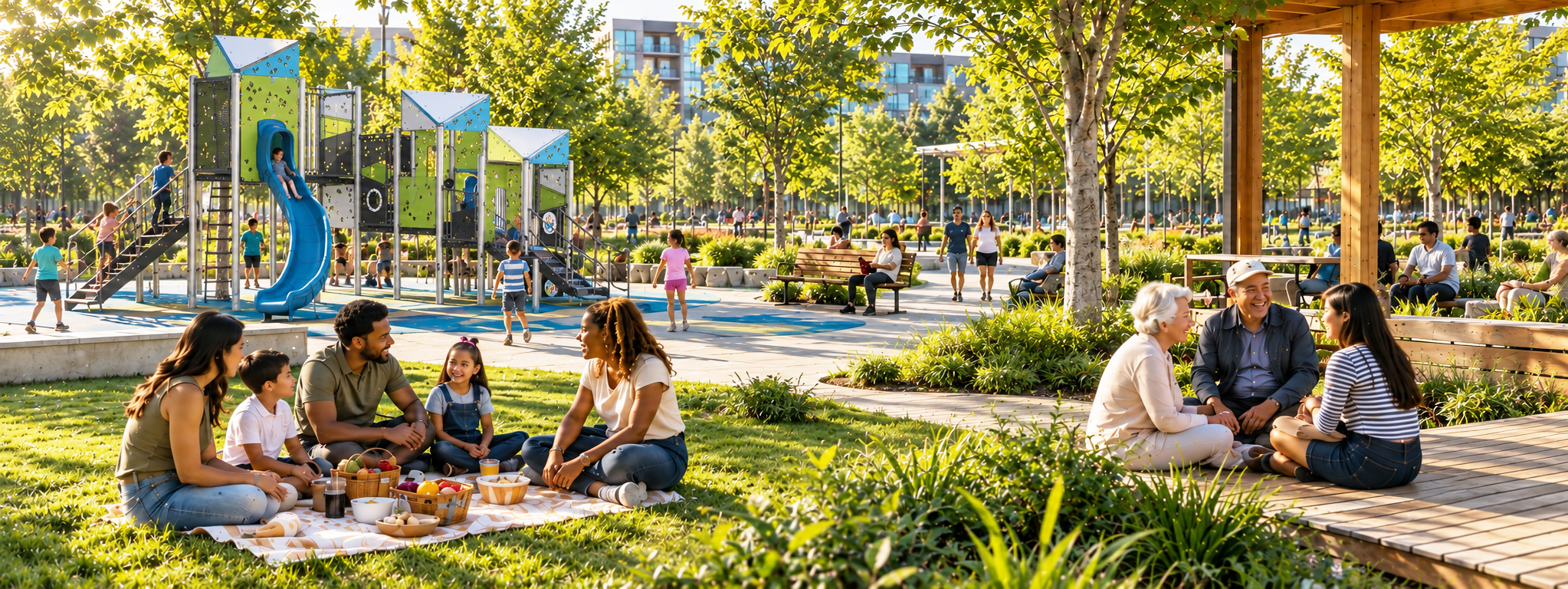
Public parks are becoming true living spaces and gathering places. We’re seeing more intensive and diverse use of these spaces, where families and friends come together to cook, picnic, play, socialize, or simply spend time together. This trend reinforces the unifying and convivial role of parks.
Access to free play
In recent years, particularly since the COVID-19 pandemic, municipalities have been giving more space to free play. This change requires permanent, adaptable, or temporary installations that allow for a variety of uses while ensuring safety and supervision.
Therefore, parks must provide spaces where people can move, play, participate in an activity, or simply "chill". The growth of the events industry also requires flexible human and technical resources capable of operating in different locations, such as a park, an alleyway, or a temporary space.
Imagining the Park of Tomorrow
Parks are no longer used just for a specific activity. People visit them to play freely, get some exercise, spend time with family, socialize, participate in events, or simply enjoy each other's company.
The challenge, therefore, lies in designing diverse, flexible, and welcoming spaces capable of meeting a variety of needs. For Jambette, understanding these new realities helps guide the design of future recreational installations and spaces. Being a visionary means identifying today the changes that will shape the parks of tomorrow.